
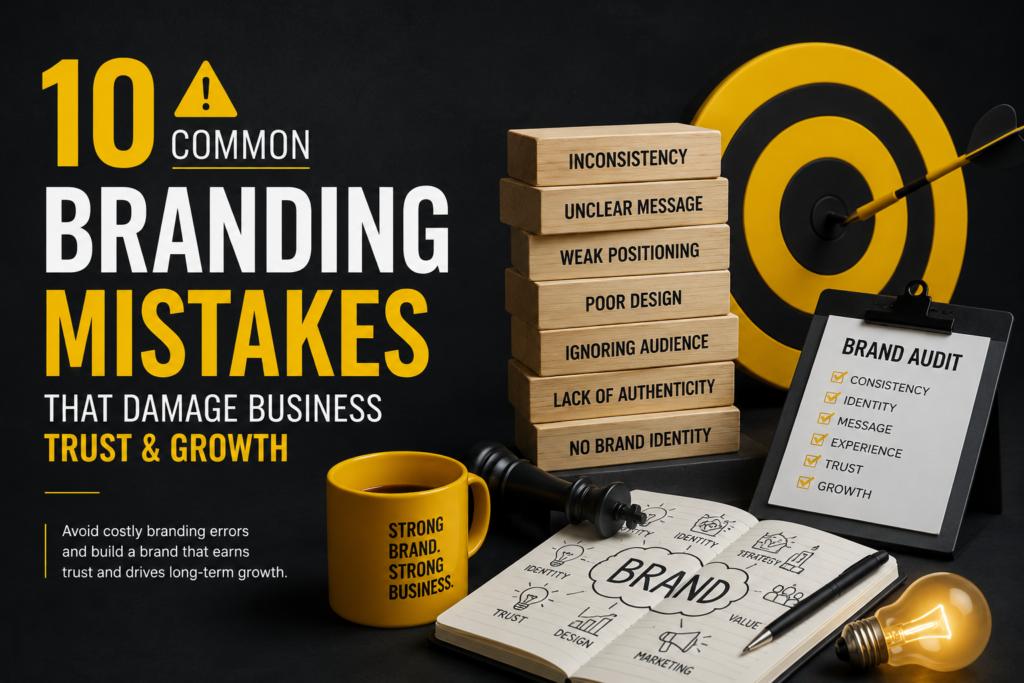
10 Common Branding Mistakes That Damage Business Trust and Growth
Many businesses struggle to grow because avoidable branding mistakes can weaken credibility and confuse potential customers. Inconsistent messaging, unclear positioning, and weak branding can reduce trust, engagement, and conversions. Even good products or services may struggle when branding fails to communicate value clearly, creating issues that negatively impact business growth and customer confidence.
Common Branding Mistake
|
Ignoring Mobile & Digital Experience |
|
Lack of Authenticity & Transparency |
|
Weak or Generic Positioning |
|
Overcomplicating Design & Communication |
|
Inconsistent Visual & Messaging |
|
Ignoring Target Audience Needs |
|
Lack of Clear Brand Identity |
What Happens
Slow website performance and weak UX/UI |
Overpromising or using misleading brand messages |
Fails to clearly differentiate the brand from competitors |
Excessive design elements and confusing messaging |
Logos, colors, and tone vary across different platforms |
Brand decisions rely on assumptions rather than proper research |
Brand voice, values, and positioning are not clearly defined |
Business Impact
Lowers visibility, engagement, and customer trust |
Hurts long-term credibility |
Customers have little reason to select your brand |
Creates user confusion and weakens the overall experience |
Weakens trust and reduces brand recall |
Leads to poor engagement and fewer conversions |
Customers struggle to understand the brand or form an emotional connection |
How to Build a Growth-Focused and Trustworthy Brand
Create Clear Brand Guidelines
Building a trustworthy brand starts with clear brand guidelines covering voice, tone, visuals, brand voice, messaging style, color palette, typography, and visual elements. A consistent identity ensures every touchpoint presents a unified image and professional image. These guidelines help keep the brand recognizable and consistent across every customer interaction.
Table of Contents
Maintain Consistency Across All Channels
Businesses build stronger customer confidence when they maintain consistency across all channels, including their website, social media, and customer interactions. A smooth user experience, thoughtful design, and clear communication create familiarity and establish a dependable brand presence. These details help customers feel more comfortable choosing the business.
Build Authority With Valuable Content
Another effective approach is building authority through valuable content, expert-driven content, and insightful content that is well-researched and addresses real problems for the audience. High-quality content helps position a brand as knowledgeable and reliable within its industry. This approach supports a growth-focused brand and gives customers useful reasons to trust the business.
Use Transparent Communication and Realistic Promises
Transparent communication and realistic promises show customers that the business is honest about its offer and avoids exaggerated claims. Clear communication and truthful communication strengthen long-term trust and encourage stronger customer relationships. A consistent professional approach helps the brand grow without making promises it cannot deliver.
How to Improve and Audit Your Brand for Long-Term Success
Branding Audit Area
|
Brand Presence Across Every Touchpoint |
|
Competitor Positioning and Market Difference |
|
Customer Insights and Feedback Review |
|
Visual Identity and Brand Messaging |
|
Digital Experience and User Experience |
|
Content Quality and Messaging Consistency |
|
Brand Alignment With Business Goals |
|
Cross-Platform Brand Consistency |
|
Brand Performance and Results Tracking |
|
Brand Evolution and Long-Term Relevance |
Key Points to Review
Check the website, social media, ads, emails, and customer interactions |
Review competitor visuals, tone, offers, and communication style |
Analyze reviews, surveys, and user behavior data |
Review logo, colors, typography, and messaging clarity |
Evaluate website speed, mobile responsiveness, and navigation |
Check tone, value, and content publishing frequency |
Review business objectives and target audience requirements |
Check uniform visuals and communication across different platforms |
Monitor engagement, conversions, and customer retention metrics |
Evaluate branding relevance and effectiveness over time |
Recommended Improvement
Find inconsistencies and keep messaging aligned across every channel |
Identify market gaps and build a unique, differentiated brand position |
Adjust branding around real customer expectations, feedback, and needs |
Improve design and simplify messaging for clearer customer understanding |
Improve usability and create a smooth, convenient customer journey |
Build a structured content plan with consistent brand messaging |
Ensure branding supports current goals and speaks to the right audience |
Standardize branding guidelines to maintain consistent presentation everywhere |
Use performance data to continuously optimize branding strategies |
Refresh and update branding while preserving the core brand identity |
Conclusion
Strong branding is a long-term investment that builds trust, credibility, and consistent business growth. Avoiding common branding mistakes helps businesses create a clear identity, stronger audience connections, and better conversions. Regular auditing and refining keep a branding strategy relevant and competitive while ensuring it remains aligned with customer expectations and changing market needs.
Pages sitting at position 20 or position 30 for the head term can still receive valuable citations. Claude frequently follows Brave Search, making that index important for developers targeting AI platforms. While Google’s top 10 continues supporting AI visibility through AI Overviews and AI Mode, it is no longer the only ranking signal that matters. A practical content strategy built around detailed search intent creates better opportunities for smaller brands to appear in AI-generated responses without depending entirely on traditional search rankings.
FAQs
Q. What Branding Mistakes Affect Businesses Most?
Common branding mistakes include inconsistent branding, unclear messaging, and ignoring the target audience.
A clear brand identity reduces confusion, strengthens trust, and supports business growth.
Sentiment has a lasting effect because training data remains unchanged until the next model cutoff. A negative Trustpilot review may continue shaping the baseline opinion of a product long after the original issue has been fixed. I always suggest responding quickly to illegitimate reviews instead of waiting for newer positive feedback to replace them. AI search systems remember older information much longer than many businesses expect, making reputation management an important part of long-term AI SEO success.
Q. How Does Branding Influence Business Growth?
Branding shapes customer perception, builds trust, improves recognition, and supports conversions.
Consistent branding strengthens customer loyalty and encourages long-term growth.
Q. Why Is Brand Consistency Important Across Platforms?
Brand consistency keeps visuals and messaging connected, creating a reliable and professional image.
Clear guidelines improve credibility, recognition, and customer trust.
Q. How Can Businesses Improve Their Branding Strategy?
Businesses can use clear guidelines, understand their target audience, and maintain consistency.
Regular brand performance reviews support data-driven improvements and long-term growth.